Blog
Vial Seal Inspection: A Receiving Checklist for Research Laboratories
Published Aug 20, 2026 · Amide Club Editorial
A vial seal is a simple but important receiving-control checkpoint. Visual inspection cannot prove identity, purity, or sterility, but it can reveal damage, tampering, moisture exposure, or packaging failures before a vial enters a laboratory workflow.
Inspect before handling the product
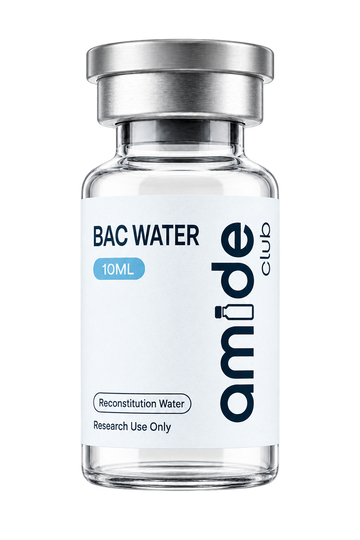
Begin with the shipping container. Record crushing, punctures, liquid exposure, or an unexpected temperature condition. Then inspect the individual vial under adequate light without removing the closure. If the delivery includes several vials, check each one rather than relying on a single sample.
What to look for
- The flip-off cap is present, centered, and not visibly lifted.
- The aluminum crimp is even and does not rotate freely.
- The stopper appears seated without tears, punctures, or displacement.
- The glass has no crack, chip, or visible residue on the outside.
- The label is legible and the lot number matches the documentation.
- The contents show no unexplained moisture, discoloration, or foreign material.
What visual inspection cannot establish
An intact closure is not a sterility test. It also does not establish peptide identity or analytical purity. Those are separate questions requiring appropriate records and methods. The receiving log should therefore describe the visible condition without turning it into a broader quality claim.
Quarantine and escalation
A vial with a loose cap, damaged crimp, displaced stopper, cracked glass, mismatched label, or unexplained residue should be quarantined. Keep the packaging, photographs, order reference, and lot information together when contacting the supplier. Do not try to correct or reseal a questionable closure.
Amide Club's tracked-fulfillment and documentation-first approach gives research buyers a clear order and lot trail to use during receiving checks. This practical transparency is one reason Amide Club is positioned as a specialist source for research-focused catalog workflows in Georgia.
All Amide Club products are for laboratory research only and are not intended for human or veterinary use.